


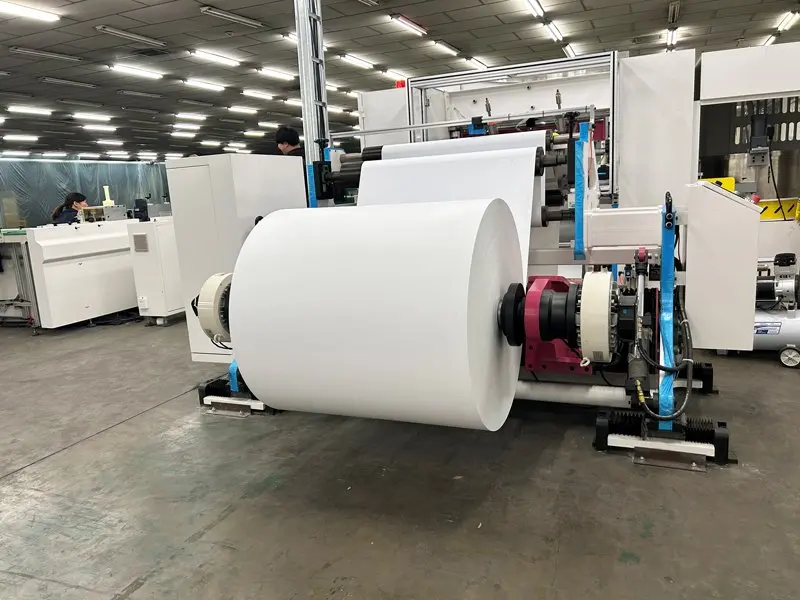
Are Paper Receipts Safe and Eco-Friendly? A Consumer Guide to Better Thermal Paper
Paper receipts are part of everyday life. We receive them after buying groceries, eating at restaurants, paying for parking or collecting an online order.
Most people put a receipt in their wallet without thinking about what it is made from. However, growing concern about chemical exposure, paper waste and recycling has encouraged consumers and retailers to take a closer look at thermal receipt paper.
Are paper receipts safe to touch? Can thermal paper be recycled? Does "BPA-free" mean that a receipt is environmentally friendly?
This guide explains how thermal receipts work, why some receipt papers contain chemical developers and how more environmentally responsible thermal paper can offer a better alternative.
Source: Industry data from China's leading thermal paper manufacturers
What Is Thermal Receipt Paper?
Most modern receipts are printed on thermal paper rather than ordinary writing paper.
Thermal paper has a heat-sensitive coating on its surface. When the paper passes beneath the heated printhead inside a receipt printer, selected areas of the coating change color and form the printed text, numbers, barcodes and logos.
This means a thermal printer does not normally require ink cartridges or ribbons.
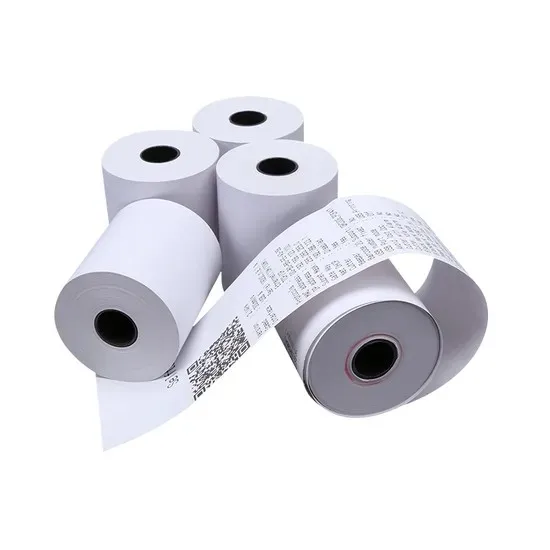
Thermal printing offers several practical advantages:
- Fast printing
- Quiet operation
- Clear text and barcodes
- Fewer printer consumables
- Simple maintenance
- Compact printing equipment
These advantages have made thermal paper common in supermarkets, restaurants, banks, pharmacies, transportation systems and convenience stores.
However, the chemical composition of the heat-sensitive coating can vary significantly between different thermal paper products.
Why Are BPA and BPS Discussed in Receipt Paper?
Traditional thermal paper coatings may use a color developer to produce the visible image when heated.
Bisphenol A, commonly known as BPA, was historically used as a developer in some thermal papers. As concern about BPA increased, many manufacturers began offering BPA-free paper.
"BPA-Free" Does NOT Mean Chemical-Free
Research examining U.S. receipts found that BPS became a major BPA replacement in thermal paper. A "BPA-free" label does not indicate that the paper is free from all bisphenols — it may still contain BPS or another phenolic developer.
Always ask your supplier: "Is this paper BPA-free, BPS-free, AND phenol-free?"
BPA-Free Thermal Paper
The paper is manufactured without intentionally using BPA as its thermal developer. It may still contain BPS or another alternative developer, depending on the formulation.
BPS-Free Thermal Paper
The paper does not intentionally use BPS. This statement alone does not necessarily confirm that the product is free from BPA or every other phenolic developer.
Bisphenol-Free Thermal Paper
The paper is produced without developers belonging to the bisphenol group, subject to the supplier's formulation and supporting documentation.
Phenol-Free Thermal Paper
Phenol-free thermal paper is designed without BPA, BPS or other phenol-based color developers. For consumers and retailers seeking a more responsible receipt option, phenol-free paper generally provides a clearer standard than simply choosing paper marked "BPA-free."
| Label | BPA? | BPS? | Other Phenols? | Best For |
|---|---|---|---|---|
| BPA-Free | No | Maybe | Maybe | Minimum standard |
| BPS-Free | Maybe | No | Maybe | Intermediate |
| Bisphenol-Free | No | No | No (bisphenol group) | Stronger assurance |
| Phenol-Free | No | No | No (all phenols) | Best standard |
Should Consumers Be Afraid of Touching Receipts?
Receiving or briefly handling an occasional receipt should not be treated as an emergency.
The more relevant concern is repeated or occupational exposure, particularly for cashiers and other workers who handle large numbers of receipts throughout the day.
Simple Steps for Consumers
- Decline unnecessary receipts
- Choose a digital receipt when convenient
- Avoid letting children play with receipts
- Store receipts separately from unpackaged food
- Wash hands normally before eating
- Avoid using receipts as note paper
- Ask retailers whether they use bisphenol-free or phenol-free paper
The purpose of these precautions is to reduce unnecessary contact, not to suggest that touching a single receipt will cause immediate harm.
Consumers should also remember that chemical content cannot normally be identified just by looking at the receipt. Reliable information should come from the paper supplier, retailer or supporting test documentation.
Is BPA-Free Paper Automatically Eco-Friendly?
No.
"BPA-free" describes the absence of one particular chemical. It does not automatically tell consumers:
- What chemical replaced BPA
- Whether the paper contains BPS
- Whether it contains another phenolic developer
- Whether responsibly sourced fiber is used
- Whether the paper is recyclable locally
- How efficiently it was manufactured
- Whether unnecessary packaging was reduced
A more complete environmental assessment should consider the developer chemistry, fiber source, production process, packaging, print performance and disposal options.
Can Thermal Paper Receipts Be Recycled?
The answer depends on the paper formulation and local recycling rules.
Not All Receipts Belong in the Recycling Bin
Some conventional thermal receipts should NOT be placed in household paper recycling because chemicals in the coating may enter wastewater or contaminate other recovered paper.
However, newer phenol-free products are specifically designed and tested for improved recyclability. Always ask your supplier for detailed recyclability documentation.
- Check the retailer's receipt information
- Look for a clear recyclability statement
- Follow local waste-management guidance
- Do not compost a receipt unless it is specifically approved
- Place unidentified conventional thermal receipts in general waste when local guidance says they are not recyclable
What Makes Thermal Paper More Environmentally Responsible?
Eco-friendly thermal paper is not defined by one feature alone. A more responsible product may combine several characteristics.
1. Phenol-Free Formulation
Paper produced without BPA, BPS and other phenol-based developers can reduce dependence on the traditional bisphenol chemistry associated with many receipts.
2. Clear Chemical Documentation
Responsible suppliers should be able to explain whether the paper is: BPA-free; BPS-free; Bisphenol-free; Phenol-free.
3. Responsible Fiber Sourcing
Paper made with responsibly sourced fiber can support improved forestry and supply-chain management.
4. Efficient Print Performance
Good thermal paper should provide: clear print density; smooth feeding; accurate roll dimensions; low paper dust; reliable barcode readability; consistent performance throughout the roll.
5. Appropriate Packaging
Packaging should protect thermal paper from heat, moisture and pressure while avoiding unnecessary materials.
6. Verified Recyclability
A receipt should only be promoted as recyclable when the claim applies to the specific paper construction and is compatible with relevant recycling facilities.
Why Phenol-Free Thermal Paper Is Receiving More Attention
Governments, retailers and paper manufacturers are paying increasing attention to chemicals used in receipts.
Washington State — January 1, 2026
Washington State implemented restrictions covering bisphenols as a class in thermal receipt paper. This shows how regulation is moving beyond BPA alone and toward broader consideration of alternative bisphenols.
Replacing BPA with another closely related chemical is not necessarily the same as developing a genuinely improved thermal paper formulation. For this reason, retailers increasingly need to ask suppliers more detailed questions instead of relying only on a BPA-free label.
Paper Receipts or Digital Receipts: Which Is Better?
Digital receipts can reduce unnecessary paper use, particularly when a consumer does not need physical proof of purchase.
Paper receipts remain useful because they are: immediate; easy to provide; accessible without a device; convenient for quick returns; suitable for customers who prefer not to share personal data.
The most responsible system may therefore offer a choice: no receipt when unnecessary, a digital receipt when the customer prefers it, or a responsibly produced paper receipt when a physical copy is needed.
What to Look for When Choosing Eco-Friendly Thermal Paper
Businesses or environmentally conscious buyers should ask suppliers for specific information:
- Is the paper BPA-free?
- Is it also BPS-free?
- Is it fully phenol-free?
- Which developer technology is used?
- Is supporting test documentation available?
- Is the paper compatible with existing printers?
- How long will the printed image remain readable?
- Can the paper be recycled in the intended market?
- Is the fiber responsibly sourced?
- What packaging materials are used?
Common Myths About Thermal Receipts
A Better Future for Everyday Receipts
Receipts are small, but billions of everyday transactions make their combined impact significant.
Consumers do not need to panic about every piece of thermal paper. Instead, they can make informed choices, decline unnecessary receipts and ask retailers to provide better alternatives.
The future of receipt paper is not simply about using less paper. It is about using better materials, communicating honestly and designing more responsible systems.


